
By Tommy Butler M.Pharm MBS
Water has traditionally been something vehicle wash operators could take for granted. Turn on the tap and there was always enough supply available to keep the wash operating. However, our experience at Butler Manufacturing Services (BMS) suggests that assumption is becoming increasingly risky.
Having worked in wastewater treatment since 1986 and exported treatment systems to more than 60 countries worldwide, we have seen first-hand how climate change, aging water infrastructure and growing urban populations are placing increasing pressure on municipal water supplies.
For vehicle (car/truck/van/container) wash operators, the consequences can be severe. A wash facility represents a significant investment, but when water shortages occur, vehicle washes are often among the first businesses affected by restrictions or mandatory closures.
This raises an important question: how can vehicle wash operators protect their businesses during drought season?
The answer increasingly lies in vehicle wash water recycling.
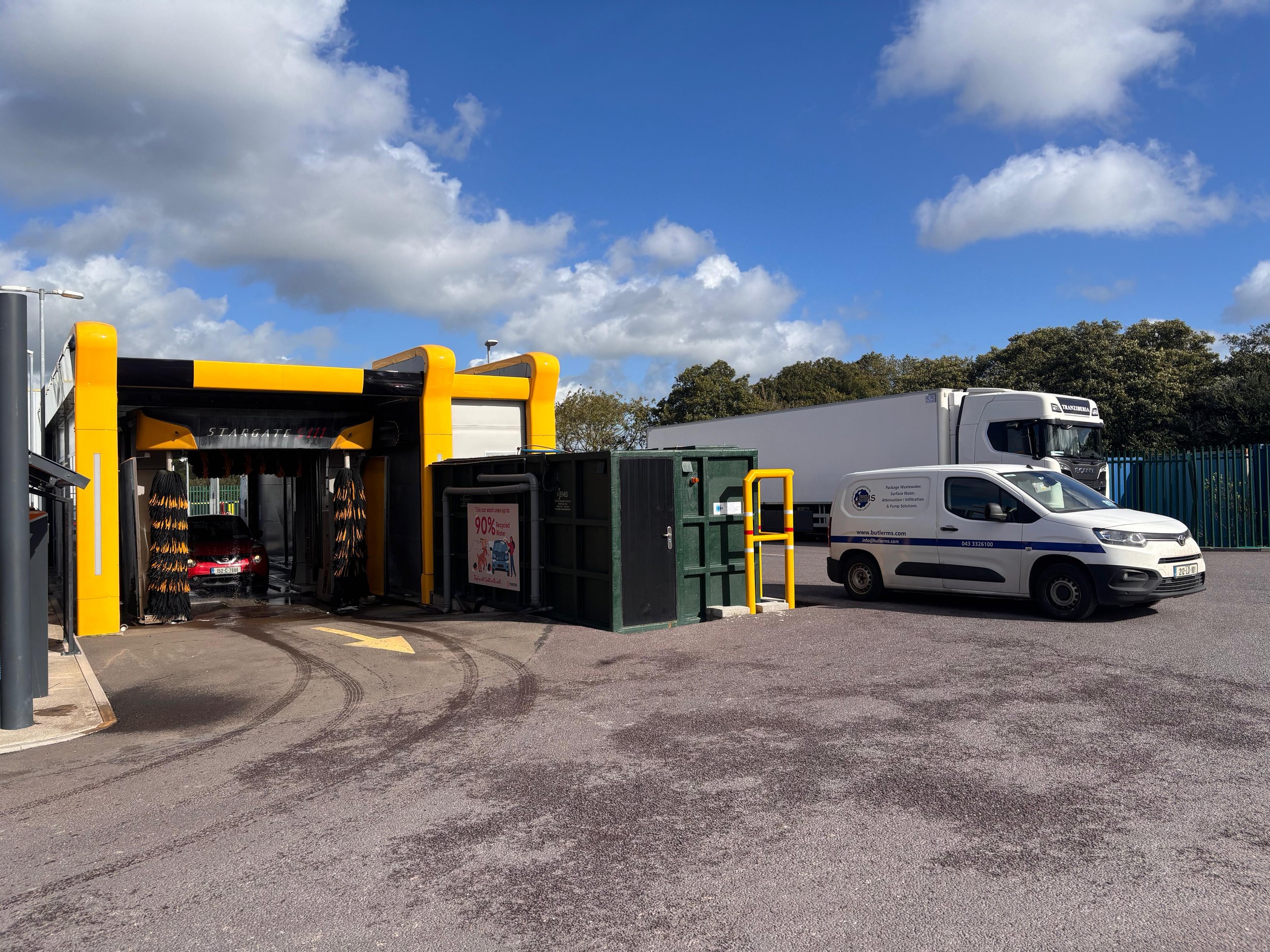
A Recyclone Vehicle Washwater Recycling System beside a rollover wash
Why Drought Is Becoming a Major Risk for Vehicle Wash Operators?
Many operators still assume that Ireland and the United Kingdom are immune to the water shortages seen in southern European countries. Unfortunately, recent experience proves otherwise.
Over the past decade, prolonged dry periods and summer droughts have become increasingly common across Europe, including Ireland and the UK. In Summer 2026, large areas of Europe experienced severe water shortages.
Vehicle wash businesses are particularly vulnerable because they consume significant volumes of water every day. During drought periods, water authorities frequently place restrictions on commercial washing activities to preserve essential water supplies.
In France, reports indicated that approximately 50% of vehicle wash facilities were forced to close during periods of water shortage in Summer 2026.
For many operators, these closures occurred during one of the busiest washing periods of the year.
The biggest risk for a vehicle wash is no longer the cost of water. It is the cost of having no water at all.
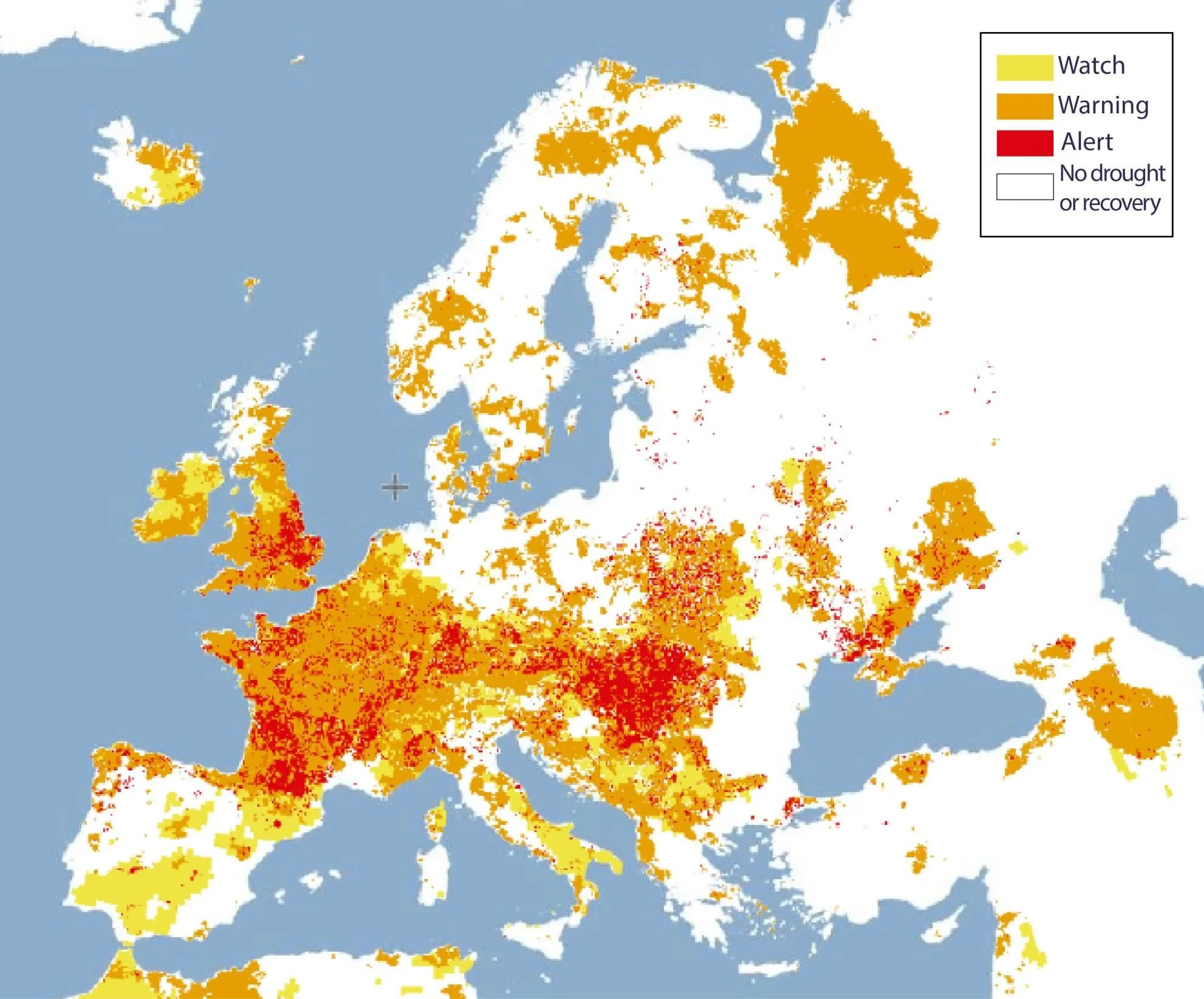
Drought Map of Europe During the Summer of 2026
The Financial Impact of Water Shortages
When a Car/Truck/Van Wash facility is unable to operate due to water restrictions, the consequences extend far beyond water costs.
Operators may face:
Loss of daily revenue
Reduced customer confidence
Difficulty retaining staff
Increased pressure on cashflow
Potential loss of commercial contracts
Inability to meet customer service commitments
A vehicle wash that has invested heavily in equipment, premises and staff can quickly incur substantial losses if operations are suspended for weeks or months.
While installing a recycling system represents an additional investment, the financial impact of a prolonged shutdown is often far greater than the cost of implementing water recycling.
How Vehicle Wash Water Recycling Reduces Drought Risk?
A properly designed vehicle wash water recycling system dramatically reduces dependence on municipal water supplies.
Instead of sending used washwater for disposal, the water is collected, treated and reused within the washing process.
Modern recycling systems can significantly reduce fresh water requirements while maintaining effective washing performance.
Benefits include:
Reduced dependence on municipal water supplies (reduction of 80-90%)
Continued operation during periods of water restrictions
Lower water bills
Improved environmental sustainability
Reduced wastewater discharge
Easier compliance with environmental regulations
For many facilities, water recycling has evolved from a cost-saving measure into a business continuity strategy.
Real Examples From the Field
Over the years, BMS has worked with a wide range of vehicle washing operations including:
Commercial car wash facilities
Truck wash operators
Hauliers
Vehicle dealerships
Food distribution fleets
Refuse and bin collection companies
Container washing facilities
Ports and logistics operators
Specialist operational units
The results consistently demonstrate the value of water recycling.
Dublin Inland Port
Dublin Inland Port operates a container washing facility where shipping containers are washed before being reloaded and returned to service.
A key planning requirement was that contaminated washwater could not be discharged.
The facility also wanted to improve environmental sustainability by reducing potable water consumption.
The outcome:
No dirty washwater discharge
More than 80% reduction in potable water use
Improved environmental performance
Long-term operational sustainability
Kevin Egan Citroen and Peugeot, Sligo
Kevin Egan Citroen and Peugeot, Sligo is a large vehicle dealership washing more than 100 vehicles per week.
Like many sites, planning requirements prevented discharge of contaminated washwater.
The dealership also wanted to reduce water charges and improve sustainability performance.
The outcome:
No dirty washwater discharge
More than 80% reduction in potable water consumption
Reduced operating costs
Improved environmental compliance.
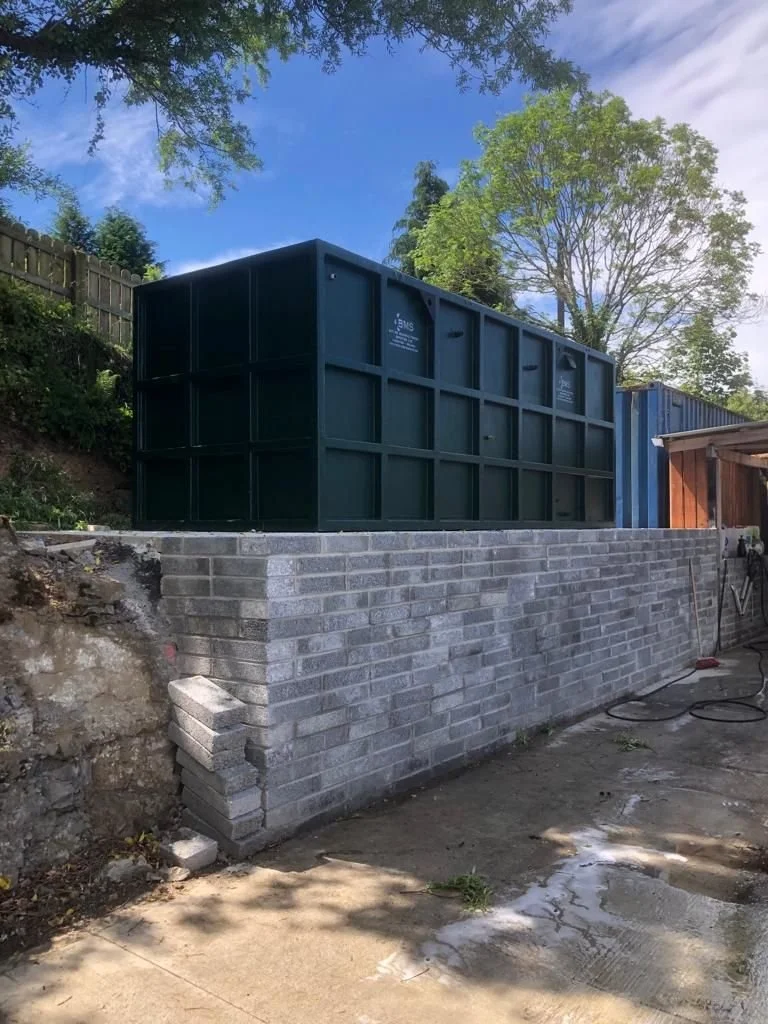
Recyclone being installed on a platform beside the Lance Wash
Case Study on use of the BMS Recyclone Car/Van Washwater Recycling System
Water Cost Savings Can Be Significant
The savings from vehicle wash water recycling can be substantial, particularly for higher-volume wash facilities.
| Weekly Water Usage | Annual Cost Saving* |
|---|---|
| 10,000 L | €2,073 |
| 20,000 L | €3,491 |
| 30,000 L | €5,236 |
| 40,000 L | €6,981 |
*Based on Irish Water charges and approximately 90% water recycling.
While these savings are attractive, many of our customers increasingly see water recycling as insurance against future water shortages rather than purely a cost-saving measure.
You can learn more about the BMS Recyclone Package Vehicle Washwater Recycling System or contact our team to discuss your project.
If you have any sewage treatment queries or questions or have a project you would like to discuss, please contact me:
Email: info@butlerms.com or Phone +353433326100
Why Many Operators Delay Installing Water Recycling
One of the most common misconceptions we encounter is that vehicle wash water recycling systems require:
Extensive excavation works
Large underground tanks
Complex operation
High maintenance requirements
Large amounts of space
Historically, that was often true.
Many older systems relied heavily on large underground tank installations, creating significant disruption and increasing installation costs.
As a result, many operators postponed water recycling projects because they assumed the overall cost and complexity would be too high.
However, an all in one Package System like the BMS Recyclone dramatically cuts the civils works/installation costs, disruption and is straightforward to maintain.
How the Recyclone Was Developed
The Recyclone was originally developed after customers approached BMS seeking a practical alternative to traditional recycling systems.
They wanted:
Minimal civil works
Above-ground installation
Small footprint requirements
Easy operation
Reliable water recycling performance
Retrofit suitability for existing wash sites
The result was an all-in-one vehicle wash water recycling system designed to simplify installation while delivering high recycling rates.
Unlike many conventional systems, the Recyclone combines:
Settlement
Hydrocyclone microfiltration
Aeration
Biological treatment
Within a single steel-reinforced GRP tank.
The system occupies less space than a standard 20-foot container footprint and can treat up to 4,000 litres of water per hour.
This makes it suitable for a wide range of vehicle washing applications.
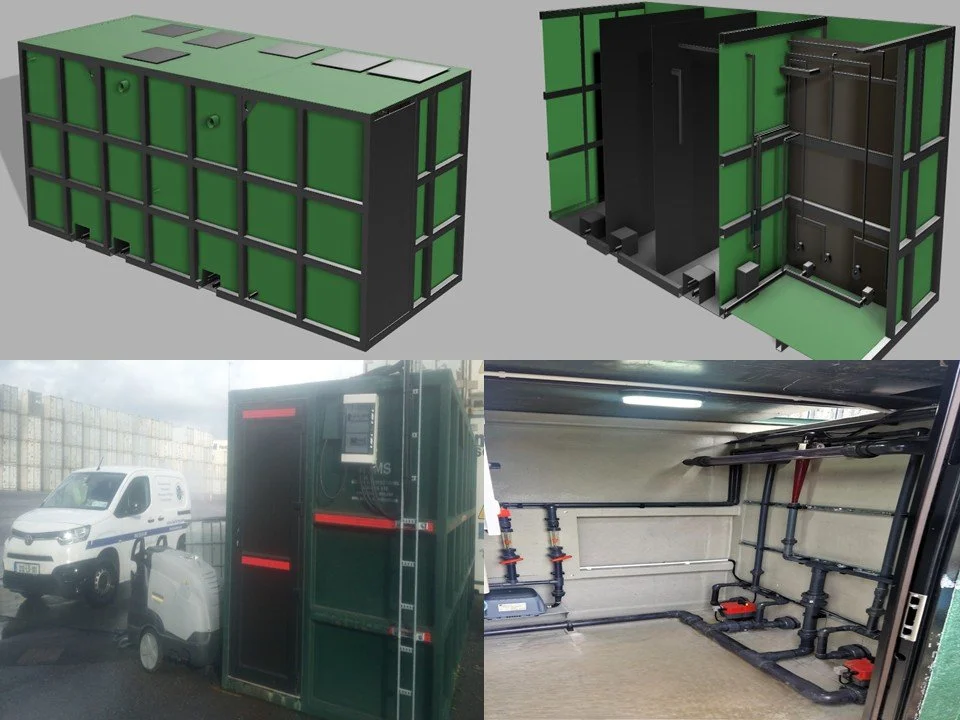
A Typical BMS Recyclone ‘All in One’ Package Vehicle Washwater Recycling System
An Increasing Focus on Pollution Prevention
Drought is only one side of the challenge facing vehicle wash operators.
We are also seeing much greater attention being given to washwater discharges.
Historically, some facilities relied on minimal treatment before discharging washwater. However, environmental authorities are now placing far greater emphasis on protecting watercourses from pollution.
Dirty vehicle washwater can contain:
Oils
Grease
Suspended solids
Detergents
Organic contamination
Where these discharges enter surface water systems, they can cause significant environmental damage.
As a result, both new and existing vehicle wash sites are facing increased scrutiny.
Many operators now need to demonstrate both:
Reduced water consumption
Proper treatment of used washwater
The ability to address both issues simultaneously is becoming increasingly important.
The Importance of Maintenance
One of the biggest lessons we have learned over nearly 40 years in wastewater treatment is that maintenance matters.
Even the best treatment system requires routine attention.
For vehicle wash recycling systems, success often depends on simple, consistent maintenance procedures such as:
Weekly inspection of silt traps/interceptors/holding tanks
Monitoring sludge accumulation. Dipping a tank is the best way to check silt levels. Alarms are not also available
Emptying these tanks when required
Routine monthly system checks
Typically:
Weekly checks take less than one hour
Monthly inspections take approximately two hours
Good maintenance delivers:
Better water quality
Improved recycling performance
Reduced operating costs
Fewer breakdowns
Longer equipment life
An excellent recycling system can be undermined by neglected silt traps/interceptors/holding tanks, while a well-maintained system will continue to perform effectively for years. These tanks are legally required to be checked and emptied when full regardless if a Recycling is installed or not.
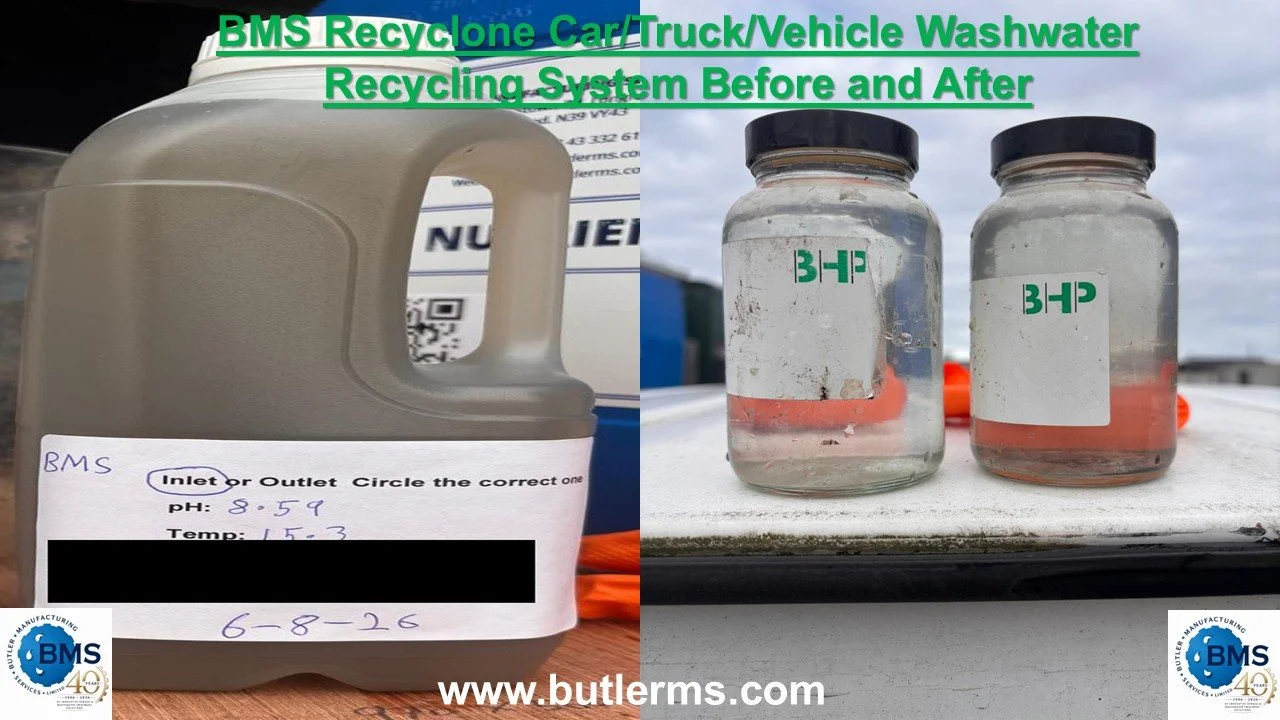
Untreated used Vehicle Washwater and Treated Cleaned Washwater after the Recyclone
Why Experience Matters
Another lesson we have learned is that the cheapest solution is rarely the best value.
Many systems appear less expensive initially because they exclude critical components such as:
Settlement tanks
Additional treatment stages
Civil works
Installation costs
Have ongoing chemical requirements.
When comparing solutions, operators should always evaluate the complete installed cost rather than simply comparing equipment prices.
Equally important is working with a supplier that has the design experience to understand different applications.
The requirements for:
A city-centre car wash
A rural vehicle wash
A food distribution fleet
A refuse vehicle depot
A container washing facility
Can differ significantly.
A Manufacture/Designer with extensive experience can help ensure the solution is designed correctly and customised to best suit a customers site, from the outset. Ensure that you ask for a customised solution and the reasons that a system and configuration has been recommended.
Looking Ahead
We believe the Vehicle (Car/Truck/Van/Bus/Container) wash industry is entering a period of significant change.
Over the next decade, operators are likely to face:
More frequent drought conditions
Higher water costs
Increased environmental enforcement
Greater sustainability expectations from customers
Higher standards for wastewater discharge management
Businesses that prepare now will be better positioned to thrive in the future.
Those that continue to rely entirely on municipal water supplies may find themselves increasingly vulnerable to circumstances beyond their control.